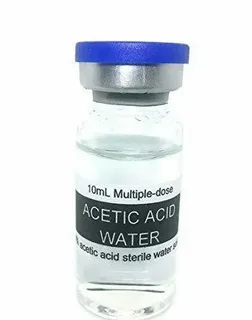
Acetic acid (CH₃COOH) is a weak organic acid best known as the main component of vinegar (aside from water). When dissolved in water, it produces a slightly acidic solution with a distinctive sour taste and pungent smell.
Chemical Properties in Water
-
Formula: CH₃COOH
-
Acidity: Weak acid (does not fully dissociate in water).
-
Dissociation reaction:
CH₃COOH ⇌ CH₃COO⁻+H⁺text{CH₃COOH} ; rightleftharpoons ; text{CH₃COO⁻} + text{H⁺}
-
pH range: Typically 2.4–3.4 for concentrated solutions; diluted vinegar is closer to pH 4–5.
-
Solubility: Fully miscible with water in all proportions.
Common Concentrations
-
Vinegar grade – 4–8% acetic acid in water (safe for food use).
-
Laboratory grade – 10–99% (glacial acetic acid is ~99%, highly corrosive).
-
Industrial cleaning or processing – Usually 10–20%.
Uses of Acetic Acid in Water
-
Culinary: Vinegar for flavoring, pickling, and food preservation.
-
Cleaning: Natural disinfectant and limescale remover.
-
Laboratory: Solvent, pH adjuster, and buffer preparation.
-
Industrial: Textile dyeing, photographic development, and polymer production.
Safety Considerations
-
Dilute solutions (like table vinegar) are generally safe for consumption.
-
Concentrated solutions can cause skin burns, eye damage, and respiratory irritation—should be handled with protective gear.
-
Always dilute by adding acid to water, not the other way around, to prevent splashing hazards.
| ML | 3ml/10vials, 10ml/10vials |
|---|---|
| Cat. No | BA3, BA10 |
Be the first to review “Acetic acid water”
Related products
peptides
peptides
peptides
peptides
peptides
peptides
peptides
peptides
Reviews
There are no reviews yet.