
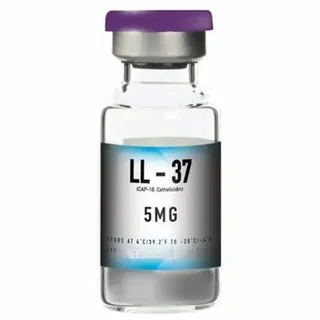

LL-37 is a naturally occurring peptide belonging to the cathelicidin family of antimicrobial peptides. It is produced by various cells in the human body, including immune cells, skin cells, and epithelial cells, and plays a vital role in the body’s innate immune defense. LL-37 is derived from the precursor protein hCAP18, which is cleaved to release the active LL-37 form.
Functions and Benefits
-
Antimicrobial Defense
-
Kills or inhibits bacteria, viruses, and fungi by disrupting their cell membranes.
-
Effective against a wide range of pathogens, including antibiotic-resistant strains.
-
-
Immune Modulation
-
Regulates inflammation by controlling cytokine production.
-
Attracts immune cells (chemotaxis) to infection sites, boosting immune response.
-
-
Wound Healing
-
Stimulates angiogenesis (formation of new blood vessels).
-
Promotes skin cell migration and proliferation to repair damaged tissue.
-
-
Anti-Biofilm Activity
-
Breaks down biofilms—protective layers some bacteria form—making infections easier to treat.
-
-
Skin and Mucosal Barrier Protection
-
Maintains healthy skin flora and prevents harmful microbial colonization.
-
Medical and Research Applications
-
Chronic Wounds – Studied for use in diabetic ulcers, pressure sores, and burns to speed up healing.
-
Respiratory Infections – Potential therapeutic for lung infections, including cystic fibrosis–related lung issues.
-
Antibiotic Resistance – Investigated as an alternative or adjunct to conventional antibiotics.
-
Skin Conditions – Explored in acne, eczema, and psoriasis treatment for its antimicrobial and anti-inflammatory properties.
-
Immune Therapies – Possible role in immune system modulation in chronic inflammation or autoimmune conditions.
Potential Side Effects
While LL-37 is naturally present in the body, excessive levels or uncontrolled use can lead to:
-
Overactive immune responses or inflammation.
-
Potential tissue irritation in high concentrations.
Summary Table
| Property | Details |
|---|---|
| Type | Antimicrobial peptide |
| Source | Derived from hCAP18 protein |
| Primary Role | Immune defense, wound healing |
| Pathogen Target | Bacteria, viruses, fungi |
| Applications | Wound healing, infection control, skin health, immune therapy |
| Risks | Possible inflammation if overused |
| MG | 10mg*10vials |
|---|---|
| Cat. No | 375 |
Be the first to review “Buy LL37 Online”
Related products
peptides
peptides
peptides
peptides
peptides
peptides
peptides
peptides
Reviews
There are no reviews yet.